Fold It Like You Mean It: Nine UK Touring Acts on the Merch Stall as a Second Stage
The house lights come up, the last cymbal has stopped ringing, and a good portion of the room makes a beeline for the back. Not the exit. The folding table. That’s where the second set begins — a quieter performance of stock, signage, card readers and eye contact that can shape how a fan feels about the music long after the van is packed.
We asked nine UK touring musicians, tour managers and merch-table veterans how they treat the stall. Their answers had less to do with selling than with hosting: the merch table is a handshake, and the first fold is where it starts.
The Table Is the Room’s Front Door
“You’ve just had 90 minutes of people looking at you,” says Nadia Okonjo, singer-guitarist with Bristol’s Harrow & the Fen. “The table is the only bit where they get to look back.”
That reversal matters. On stage, the band controls the room. At the table, the room controls the pace. Tom Beresford, who tour-manages Leeds trio Pale Sunday, calls it “the decompression chamber”. He says: “The set is loud and fast. The stall has to be calm and legible. If the queue can’t see what’s on offer from three metres back, you’ve lost them before they’ve opened their wallet.”
Good stalls are laid out like a small shop window: height, light, a clear run to the card reader. Bad ones look like a car boot sale after a downpour.
What Goes On the Table (and What Stays in the Van)
Stock is an edit, not a dump. Imani Fraser of Glasgow’s Bellhouse travels with two T-shirt designs, one tote, one 7-inch and a risograph zine. “I used to bring six designs because I was scared of running out,” she says. “Now I bring two because I’m scared of overwhelming people. Choice is a tax.”
Dev Patel, bassist with Manchester’s Cinder Lane, has a rule: nothing on the table that he wouldn’t wear himself. “If it’s not good enough for a Tuesday in town, it’s not good enough for the stall. Fans can smell resentment.”
Size runs are the quiet craft. Ruth Aldridge, who runs the stall for Sheffield band The Nocturnes, orders more medium and large than anything else, keeps a small box of XS and 3XL under the table, and never puts the box on display. “People don’t want to ask for their size like it’s a favour,” she says. “Make it easy.”
The Price List You Can Read From the Queue
Signage is where the amateur and the professional part ways. Callum Mackay, drummer with Edinburgh’s The Lowing, writes his out in thick marker the night before. “Big numbers, no comedy fonts, no ‘ask for bundle deals’. If I have to explain the price, the price is wrong.”
Most artists we spoke to land on round numbers — £20 for a shirt, £25 for a shirt and a record — not because they’re lazy but because the queue is dark and the card reader is slow. Priya Nair of Birmingham’s Shoreline Hymns puts a small laminated card at the front: “Card and cash. No minimum. Ask me anything.” She says the “ask me anything” line does more work than any hashtag.
Tour manager Sophie Tran, who has run stalls from the Windmill to the Brudenell, adds a practical note: “Put the prices on the table, not on the wall behind you. People look down when they’re nervous.”
Who Works the Stall
The person behind the table is the band’s first impression in human form. Sometimes it’s the singer. Sometimes it’s a friend on £40 and a pint. Either way, the brief is the same: don’t scroll, don’t eat, don’t treat the queue like an interruption.
Gareth Llewellyn, guitarist with Cardiff’s Taff Merthyr, says he learned this the hard way. “I used to be on my phone between sales. A guy waited, then said, ‘I’ll come back.’ He didn’t. Now I stand up. I say hello. I ask what they thought of the support act. It’s not a script; it’s just manners.”
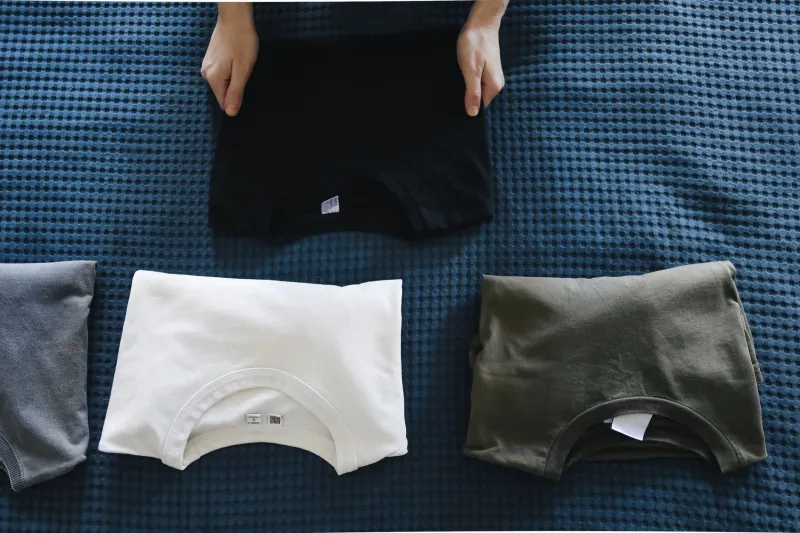
Beresford trains merch sellers to fold as they talk. “It gives your hands something to do and it makes the shirt look like it’s been cared for. A folded shirt says: someone thought about this. A screwed-up one says: we’re already in the van.”
The First Fold
Which brings us to the fold itself. Not a military crease, not a retail display. Just a simple, honest rectangle. Imani Fraser does it on the table, in front of the buyer. “It takes four seconds. But it turns a transaction into a handover. They see you touch it. They see you care.”
Nadia Okonjo agrees. “I fold the shirt, put it in the bag, and hand it over with both hands. It’s a small ceremony. People remember small ceremonies.”
Then there’s the after-sale. A sticker for the kid. A spare pin for the teacher. A note about the next gig in their town. Dev Patel keeps a roll of black gaffer tape and writes the setlist on it for anyone who asks. “It costs nothing and it’s worth everything.”
After the Last Shirt
The stall comes down quickly — table folded, float counted, unsold stock back in the van. But the handshake lingers. The shirt gets worn to work. The tote goes to the market. The zine sits on a coffee table in Leeds or Glasgow or Bristol, quietly doing the work of a second stage.
“You don’t remember the queue,” says Ruth Aldridge. “You remember the person who said, ‘That was my first gig.’ You remember the fold.”
Nine people, one table, and a few seconds of eye contact. That’s the handshake. That’s the art of the first fold.