The Box Under the Desk: What UK Venues Keep When Everyone Has Gone Home
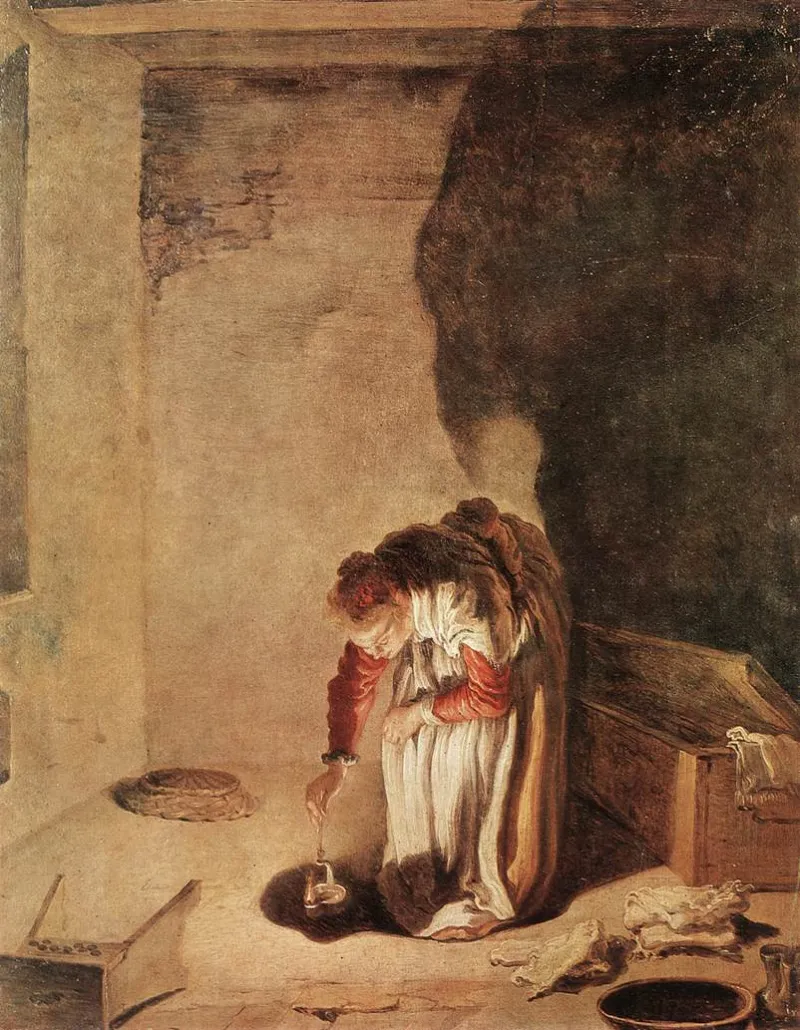
Photo: Domenico Fetti, Public domain, via Wikimedia Commons
The box is usually under the desk. It might be a cardboard archive box, a plastic crate, a drawer that no one opens unless someone asks. In a 120-cap music room in Bristol it is a blue stacking crate with a label that says “LOST PROPERTY — PLEASE ASK AT BAR”. In a theatre in Glasgow it is a shoe box, then a bigger shoe box, then a shelf. In a village hall in Norfolk it is a biscuit tin.
Every venue has one. And every lost property box is a small, accidental portrait of the people who come through the door.
What Gets Left
The obvious things are there: umbrellas, reading glasses, scarves, phone chargers, a cardigan over the back of a chair. But the box also collects the stranger items — a single left shoe, a child’s sock, a paperback with a bus ticket as a bookmark, a notebook with three pages of a to-do list and no name.
“We get a lot of glasses,” says a front-of-house manager at a community venue in Leeds. “People take them off when the lights go down, put them on the seat, and then stand up in the dark. They don’t realise until they’re on the bus.”
The box is also a weather report. After a wet Tuesday in Sheffield, it fills with umbrellas. After a warm night, it fills with layers. After a school holiday, it fills with small things: water bottles, hair clips, a plastic dinosaur.
The Return Policy
The ethics of the box are informal but real. If something has a name in it, most venues will try to make contact. If it has a phone number, they might ring. If it is a bank card, they will usually cut it up after a week. If it is an umbrella, it goes in the box and waits.
“We’re not a lost property office,” says a venue manager in Bristol. “We’re a room with a box. But you can’t just bin a pair of glasses. That feels wrong. So the box gets fuller, and every few months someone goes through it and decides what’s been in there too long.”
The decision is rarely formal. It depends on who is doing the clearing, how much space there is, and whether the item feels like it might still matter to someone. A single glove is easy to throw away. A notebook is not.
The Ethics of Holding On
There is a quiet responsibility in keeping other people’s things. A lost property box is not a museum. It has no catalogue, no accession numbers, no conservation policy. But it does hold a record of absence — the moment someone realised they had left something behind, and the moment someone else decided to keep it safe.
At a theatre in Glasgow, the box once held a child’s cardigan for six months. “The mum rang twice. She was sure it was gone. Then she came in one Saturday and there it was, folded on the shelf. She cried. It was just a cardigan. But it wasn’t just a cardigan.”
That is the thing about lost property. The object is rarely valuable. The meaning is in the return.
A Portrait, Not a Museum
Read the box closely and you learn how a room behaves. A music venue collects earplugs, lighters, a single earring. A theatre collects programmes, reading glasses, a scarf that someone draped over a seat. A village hall collects Tupperware, a walking stick, a pair of gardening gloves.
The box tells you what the room does to people. It makes them take off a layer. It makes them put down a bag. It makes them forget their glasses when the lights come up.
And it tells you something about the venue, too. A venue that keeps a box is a venue that expects people to come back. A venue that bins everything is a venue that has decided the room is a transaction. Neither is wrong. But the box is a small act of optimism.
So the next time you leave a scarf on the back of a chair, know that it probably went into a crate under a desk. It will sit there with the umbrellas and the single shoes and the notebook with no name. It will wait. And someone will decide, quietly, whether to keep it or let it go. That decision is the venue’s memory, written in other people’s things.