Waiting Rooms With a Sense of Occasion: How UK Venues Warm Up a Crowd
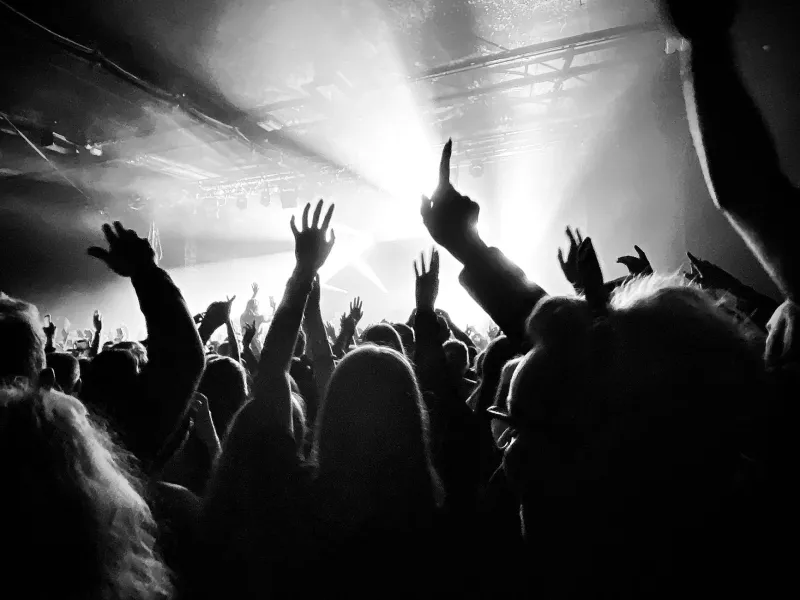
It is 7.12pm on a wet Tuesday in Leeds and the queue outside the Brindley Rooms has already started to bend around the corner. Nobody is on stage. Nothing has officially begun. But the evening is, in a small way, already underway. The door staff are working the line like hosts at a party. Somebody has propped open the side gate so the wind does not funnel down the alley. A handwritten sign — “Bar open upstairs, toilets on the first floor, we’ll come and find you” — is taped at eye level. It is not glamorous. It is not even particularly visible in the rain. But it is the first thing the venue says to its audience, and it says it before a single note is played.
That ten or twenty minutes before doors is the part of the night most venues never put on a poster. It is also the part that front-of-house teams think about constantly. The queue is not a holding pen. It is a handshake.
The ten metres before the door
“People arrive early because they are nervous,” says Mara Ellison, front-of-house manager at the Brindley Rooms. “They don’t know the building. They don’t know if they can bring a bag in. They don’t know where the loos are. If you leave them standing in the rain with no information, that nervousness curdles into something else. We try to answer the questions before they are asked.”
That means signage that is legible, not just legal. It means staff who are briefed on the running order and can say, with confidence, that the support act is on at eight and the main set at nine. It means a door person who knows where the nearest cashpoint is and which pub over the road does food after ten. Small things. The kind of things that turn a line of strangers into a room.
At the Tannery in Bristol, programmer Owen Pryce talks about the “pre-door atmosphere” as a design problem. The venue has a small courtyard, and rather than cram it with branded banners, they leave it mostly alone. A couple of benches. A lamp. A chalkboard that lists the night’s timings. “We want it to feel like a place you might linger rather than a corridor you have to endure,” he says. “The queue is the first room of the building. It should have a bit of character.”
A script for the threshold
Not every venue has a courtyard. Some have a pavement, a bus stop and a bollard. But the principle holds: the threshold is a place where a crowd learns how to behave. At the Old Salt theatre in Newcastle, the front-of-house team uses what they call a “door speech” — a short, friendly announcement made at the front of the queue about ten minutes before opening. It covers accessibility, cloakroom, latecomers and the fact that the bar takes card. It is delivered by a person, not a loudspeaker. It is repeated. It is not a lecture.
“We used to think of it as crowd control,” says deputy venue manager Priya Nair. “Now we think of it as crowd care. There’s a difference. Control is about moving people along. Care is about making sure they know what’s happening and feel okay about it.”
That shift in language matters. At the Lantern cinema in Cardiff, staff are trained to look for the people who are hanging back — the ones who arrive alone, the ones who seem unsure, the ones who might need a quiet word. The queue is the best place to spot them. “You can’t help everyone,” says head of audience experience Cerys Bowen. “But you can notice. A smile and a ‘you’re in the right place’ goes a long way.”
The foyer as a green room for the audience
Once the doors open, the foyer takes over. This is where the real pre-show craft happens: lighting that is warm rather than clinical, music that is low enough to talk over, a bar that is staffed before the rush, and enough seating that nobody has to perch on a radiator. Theatres have known this for years. Music venues are catching up. Independent cinemas have turned it into an art form.
At the Screenroom in Brighton, the foyer is deliberately dim and slightly cluttered — posters, plants, a table of flyers, a single armchair. “We want it to feel like a living room that happens to have a screen in it,” says programmer Jonah Meade. “The queue outside is the front step. The foyer is the hallway. By the time you get to your seat, you’ve already had a bit of the evening.”
That sense of arrival is not accidental. It is built from small decisions: where the ticket desk sits, how the queue snakes, whether there is a place to put a wet umbrella, whether the toilets are signposted before you need them. At the Glasshouse in Glasgow, the front-of-house team has a checklist that includes “temperature of the foyer” and “volume of the pre-show playlist.” It sounds fussy. It is not. A foyer that is too hot makes people irritable. A playlist that is too loud makes them shout. Neither is the mood you want before a quiet folk set.
What the queue tells the programmer
The queue is also a feedback mechanism. Who is arriving early? Who is arriving late? Who is coming in groups? Who is coming alone? At the Waterline in Manchester, programmer Freya Okafor uses the pre-door crowd as a loose barometer for how a night will land. “If the queue is chatty, the room will be chatty. If it’s quiet and watchful, we know we might need to work a bit harder to warm things up. It’s not scientific. But it’s useful.”
There is also the weather. A rainy queue in February is a different proposition from a sunny queue in June. Venues that plan for both — a covered area, a hot drink, a member of staff with an umbrella — are not just being nice. They are protecting the atmosphere. A wet, cross audience is harder to win over. A dry, looked-after one is already on your side.
The small decisions that do the heavy lifting
None of this requires a big budget. It requires attention. A sign that says “we’ll be open in five minutes” is better than a sign that says “doors 7pm” and nothing else. A door person who says “you’re in the right place” is better than one who says “tickets?” A foyer with a bench is better than a foyer with a rope. These are not grand gestures. They are the grammar of a good night out.
The nine venues we spoke to all said some version of the same thing: the queue is part of the show. Not because it is glamorous, but because it is the moment the audience decides how they feel about being there. Get it right, and they walk into the room already warm. Get it wrong, and you spend the first twenty minutes of the performance winning them back.
The doors are not the beginning. The queue is. And the best venues know it.