Leave It Better Than You Found It: Seven UK Tour Managers on the Quiet Craft of the Exit
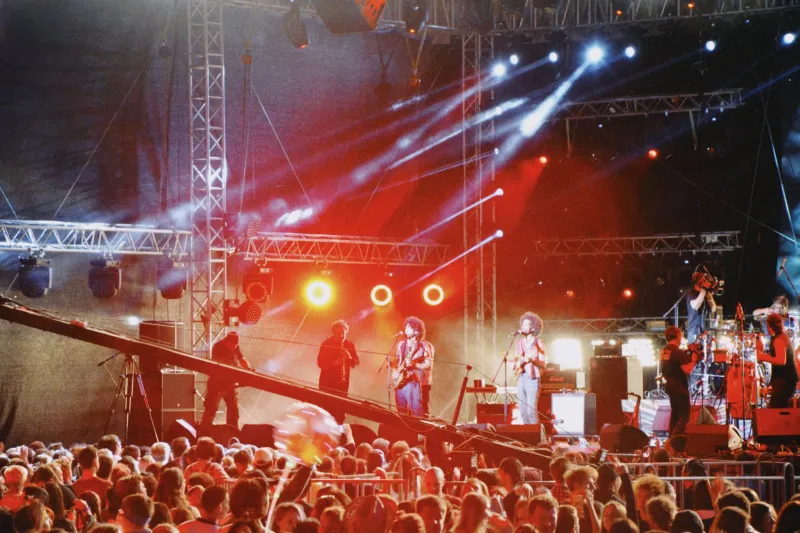
The house lights come up. The crowd funnels out. Someone is already asking where the van is. For a touring act, this is not the afterparty — it’s the second shift.
Load-out has a reputation problem. It’s the bit nobody photographs, the hour that never makes the tour diary. But ask the people who book rooms and run crews, and they’ll tell you the same thing: the exit is where a band’s professionalism gets read aloud. Not the set, not the merch table, not the encore. The last hour.
We spoke to seven UK tour managers about the unglamorous craft of leaving a venue right — the coil, the count, the thank-you, the van pack — and why a clean getaway is really a handover.
The Van Is a Puzzle With a Deadline
Packing a van is not a chore. It’s a sequence, and every tour manager has one. Dev Patel, who looks after a folk act on the UK arts-centre circuit, describes it as “a three-dimensional Tetris with a curfew.” His rule: “A good pack is a sequence, not a shove. Amp, drum hardware, merch, then the soft stuff. If you have to move one case to get another, you’ve already lost.”
The deadline isn’t just the drive. It’s the venue’s closing time, the promoter’s key, the night porter waiting to lock up. A van packed in twenty calm minutes is a courtesy. A van packed in ninety fraught ones is a relationship quietly worn down. “You can tell a lot about a tour from the back doors,” Patel says. “If it’s chaos in there, it was probably chaos on stage too.”
The Coil Is a Promise
Cables are the small change of touring, and they get treated like it. Priya Nair, who tours electronic acts through venues like Village Underground and Manchester’s Gorilla, is blunt about the over-under coil: “Over-under. Every time. A cable coiled wrong is a cable that fails in Stoke next Tuesday.”
It sounds fussy. It isn’t. A properly coiled cable is a promise to the next crew, the next venue, the next tour manager who opens that flight case. It’s also a promise to your own future self, standing in a cold loading bay at 1am, trying to find the one XLR that isn’t kinked. The load-out is full of these small promises. The lid on the DI box. The gaffer tape folded back on itself. The microphone returned to the right slot. None of it is glamorous. All of it is the job.
The Thank-You Has Names In It
Ruth Okonjo, who tours a rock trio, says the thank-you is not a vibe. It’s a list. “The bar staff have been on their feet since six. You thank them by name, you stack your own glasses, you don’t leave a rider tray of half-eaten crisps.”
That last one comes up a lot. The rider is a contract, not a picnic. Tour managers talk about leaving the dressing room as they found it — or better. Bins used. Surfaces wiped. Towels not left in a damp heap. It’s not about being precious. It’s about the next act walking into a room that doesn’t smell of someone else’s crisps. “The venue staff remember,” Okonjo says. “They remember the band who left a mess, and they remember the band who didn’t. The second one gets the good monitor mix next time.”
Promoters Talk
Callum Fraser, based in Glasgow and a regular at King Tut’s and The Cluny in Newcastle, puts it plainly: “Promoters talk. Not in a conspiracy way — just in the way people talk. ‘They left it tidy’ travels faster than ‘they were loud.’”
That’s the commercial heart of the load-out. A promoter who has had a calm, clean exit is a promoter who says yes to the next tour, the next support slot, the next venue upgrade. A promoter who has spent an hour chasing a missing mic stand is a promoter who remembers. “It’s not about being a saint,” Fraser says. “It’s about being low-maintenance. Low-maintenance is a skill.”
Boring Is the Goal
Tom Beresford, who works with Americana acts on the folk-and-roots circuit, reckons the best exits are almost invisible. “The best exits are boring. No drama, no hunt for the missing DI box, no one shouting at the driver. Boring is a compliment.”
That means a count. A walk-round. A final check of the stage, the dressing room, the merch table. It means knowing which cases are yours and which belong to the venue. It means not leaving the load-out to the youngest crew member while everyone else stands by the van. “The last hour is where you find out if a tour is a team or a group of people who happen to be on the same bus,” Beresford says.
The Last Thing You Do
Jess Llewellyn, who tours pop acts through the academy-and-theatre circuit, has the shortest answer of the seven. “You leave the stage as you’d want to find it. That’s it. That’s the whole philosophy.”
It sounds simple because it is. The load-out is the other show — the one without an audience, where the applause is a clean stage and a promoter who’ll take your call. In a year when small tours are still watching every fuel receipt, that goodwill is not soft. It’s infrastructure. Mara Ellison, who has tour-managed indie acts for over a decade, puts a fine point on it: “The show is ninety minutes. The exit is two hours. Only one of them gets you rebooked.”
So coil the cable. Count the cases. Thank the bar staff by name. Leave the room better than you found it. The van is waiting, but there’s no rush to be gone. There’s only a rush to be asked back.