The Scratches Are the Story: How UK Studios Write a Case Study People Actually Read
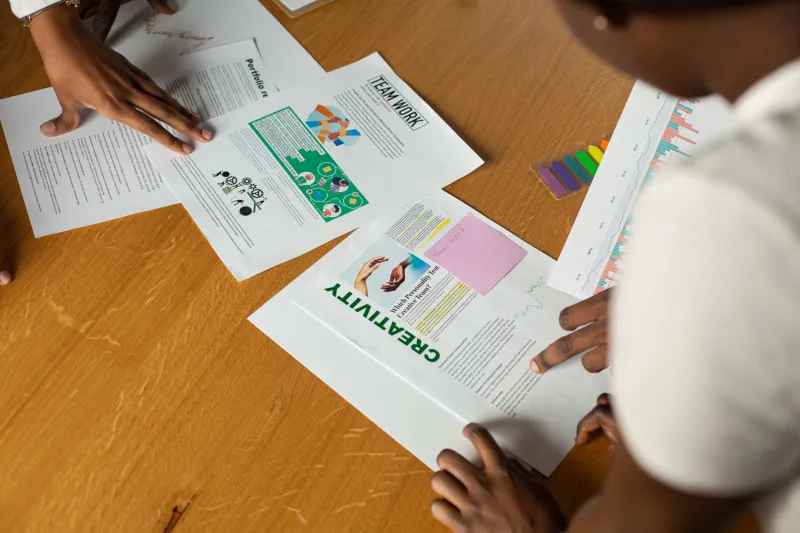
Most case studies arrive like a school report written by the child: brief, insight, solution, results, applause. The client is happy, the metrics are up, and the studio has somehow learned nothing it can share. In the UK, where a lot of creative work happens at small kitchen tables and shared desks, the best case studies tend to be less triumphant. They show the scratches.
I asked designers, makers and consultants around the country how they turn a finished job into something useful. The answer was not a template. It was a mood: make it teach, not perform.
The brief is rarely the beginning
A Sheffield product studio starts its case studies a week before the brief lands. Not with the client's PowerPoint, but with the messy context: the budget that had already been trimmed, the first meeting where someone said 'we don't want it to look designed', the fact that the previous supplier had left a half-finished system behind. 'By the time the brief arrives, half the decisions are already made,' says one of the studio's directors. 'If we pretend the brief was the starting gun, we're lying about how design works.'
That context does not need to be dramatic. It needs to be accurate. A few lines about the constraints can do more than a paragraph of self-congratulation. Readers in 2026 are fluent in polished studio language. They can smell a victory lap from the first subheading.
Show the working, not just the win
A Bristol brand designer keeps a folder called 'near misses'. It holds the routes that did not make the final presentation: the wordmark that felt too clever, the colour system that failed on a van, the tone of voice that the client's own team could not repeat without wincing. When she writes a case study, one or two of those near misses usually make the cut. 'If we only show the final logo, we're selling taste,' she says. 'If we show three near-misses and explain why they failed, we're teaching judgement.'
Judgement is the thing clients are really buying. It is also the thing that disappears when a case study is reduced to a before-and-after slide. The trick is to include enough of the wrong turn to be useful, without turning the piece into a confession booth. A failed route is only worth showing if you can say what it taught you. Confession without reflection is just content.
Credit is a design decision
Case studies are prone to the royal 'we'. The studio led the identity, but the photographer shot the campaign, the copywriter found the line, the developer built the thing, and the intern spent two days retouching the packshots. If the case study says 'we', the reader learns nothing about how the work was actually made.
A Glasgow ceramicist who collaborates with illustrators and a local fabricator now includes a short 'who did what' line in every project write-up. It is not a legal credit. It is a map. 'The reader needs to know who made the decisions, not just who signed the invoice,' she says. When a client will not be named, the studio describes the role instead: 'a regional housing association', 'a family-run food producer'. The story still works. The credit stays honest.
There is a commercial argument here too. Collaborators are more likely to send future work your way if you name them properly. A case study that hoards all the glory is a strange kind of advert.
The wrong turn is proof of work
A Leeds digital studio has a case study that begins with the prototype it should never have built. The team spent three weeks making a beautiful, responsive thing that solved the wrong problem. The client had said they wanted 'a dashboard'; what they needed was a weekly email. The case study includes a screenshot of the dashboard anyway, followed by the question that changed the project: 'What would make this useful on a Monday morning?'
That is not a weakness. It is evidence. It shows the studio can listen, change course and still deliver. It also gives the reader permission to admit their own brief might be wrong. The most persuasive case studies are often the ones that make the client look thoughtful, not just lucky.
Numbers need a baseline
UK clients are a practical lot. They want to know what changed. But a percentage without a baseline is a party trick. 'Conversion up 18%' means little if nobody knows where it started, over what period, or what else happened at the same time. A Manchester consultant who works with cultural organisations now writes results in plain sentences: 'The box office team went from spending two days a week on manual reporting to about two hours. The saving came from one spreadsheet and a changed meeting, not from a new website.'
That kind of honesty is more convincing than a graph with no axis. It also protects the studio. If the numbers are modest, say so. The reader will trust the next claim more.
End with what remains
The weakest ending in any case study is 'the client loved it'. The strongest is usually a note on what the studio would do differently, or what is still unfinished. A Birmingham graphic designer ends each project write-up with a short section called 'What we'd change'. It might be a production detail, a workshop that should have happened earlier, or a handover document that was too thin. 'It makes the work feel alive,' she says. 'It also stops us from pretending every project is a closed door.'
A case study is not a plaque. It is a room the reader can walk into. Show them where the furniture was moved, who carried it, and which wall you would knock through next time. That is how you write a case study that does not sound like a victory lap. You show your working, and you let the scratches stay visible.