The Edited Shelf: Three UK Shopkeepers on Curation as a Public Service
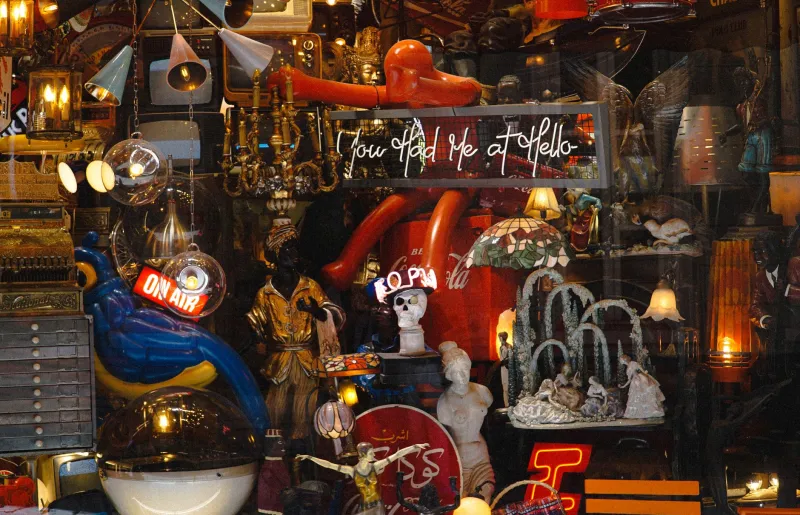
The window as a sentence
On a wet Tuesday in Margate, Ruth Achebe is rearranging a single shelf. There are six objects on it: a stoneware jug, a folded linen tea towel, a packet of seeds, a small book about tidal pools, a bar of soap and a postcard. Nothing else. The window behind her is similarly spare — one lamp, one handwritten card, one deliberate gap.
‘The gap is the point,’ she says. ‘People think a window is a place to put things. It is really a place to leave things out.’
Achebe runs Fold & Crease, a paper-goods and small-homeware shop that has occupied the same narrow premises for eight years. Like many independent retailers in the UK, she has watched footfall shift, rents wobble and online recommendation engines become very good at guessing what people might like next. Her response has not been to compete on volume. It has been to curate in public — to treat the window, the shelf and the handwritten sign as a kind of slow editorial voice.
It is a quiet argument with the algorithm. The feed says: here is more of what you already wanted. The window says: here is a small, specific world, and you are welcome to step into it.
The economics of saying no
Callum Doig, who runs The Long Table, a deli and pantry in Glasgow’s Shawlands, puts it in blunter terms. ‘Every extra line on the shelf is a decision I have to make again next week,’ he says. ‘If I stock twelve kinds of oatcake, I am not curating. I am hiding.’
The Long Table stocks around 180 lines, which Doig admits is still too many. He has spent the past two years cutting ranges, resisting the urge to fill space and learning to say no to suppliers who promise a quick margin. The result, he says, is not just a prettier shop. It is a better business.
‘When you edit hard, the customer trusts you more,’ he says. ‘They stop asking “which one is good?” because they can see you have already asked it for them. Sell-through goes up. Waste goes down. You stop buying things just because they look good on a spreadsheet.’
That is the part often missed in conversations about curation. It is not only an aesthetic pose. It is an operational discipline. Independent retailers work with limited cash, limited space and limited attention. A tightly edited shelf is a way of protecting all three. It is also a way of making a recommendation without a recommendation engine — a human filter that can explain itself.
Meera Patel, who runs Common Room, a stationery and bookshop in Leicester, says the hardest part is the emotional cost of refusal. ‘You get sent lovely things by lovely people,’ she says. ‘And you have to say, “This is not for us.” It feels rude. But a shelf that says yes to everything says nothing at all.’
Handwriting and other slow signals
All three shops use handwritten signs. Not because they are nostalgic for a pre-digital age, but because handwriting carries information that a printed label cannot. It shows effort. It shows a person. It shows that someone stood in the shop and thought about the words.
At Fold & Crease, Achebe writes a short note each morning. Recent examples include ‘The jug that makes tap water feel like an occasion’ and ‘For the bedside table you keep meaning to clear’. She says the notes are not slogans. They are prompts.
‘A sign is a conversation starter,’ she says. ‘If someone laughs, I know they are looking. If they ignore it, that is useful too. You cannot get that from a banner ad.’
Doig uses a chalkboard for what he calls ‘the useful sentence’ — a line that explains why a product is on the shelf. ‘This week it was “The marmalade for people who think they do not like marmalade”,’ he says. ‘We sold out by Thursday. Not because of the words alone, but because the words gave people permission to try something.’
Patel has gone further. Common Room runs a small ‘shelf of shame’ — a tongue-in-cheek display of products that staff love but customers consistently ignore. The shelf is labelled with honest notes: ‘We cannot explain why this has not sold. Please help.’ It is a piece of theatre, but it is also a form of transparency. It admits that curation is not a science. It is a series of guesses made in public.
The limits of the window
None of this is a cure for the high street’s structural problems. Business rates, rents, parking charges and the sheer convenience of next-day delivery are not solved by a nice display of stoneware. Achebe is quick to say that her window is not a marketing strategy in itself. It is a signal to the people already walking past.
But that signal matters. In a world where recommendation is increasingly automated, the independent shop offers something that algorithms struggle to replicate: context. A window in Margate can reference the sea. A deli in Shawlands can reference the local school run. A bookshop in Leicester can reference a conversation that happened that morning. The feed knows what you clicked. The shop knows what you need.
‘I am not against the internet,’ says Doig. ‘I am against the idea that more choice is always better. A good shelf is an argument. It says: this, not that. Try this. Trust me.’
Achebe puts the postcard back in the window and steps outside to look at it. The rain has stopped. A woman pauses, reads the handwritten note, smiles and comes in. It is not a targeted ad. It is better than that. It is a small, public act of taste — and it still works.