Twenty Minutes, Well Held: How UK Theatres Keep the Interval in Character
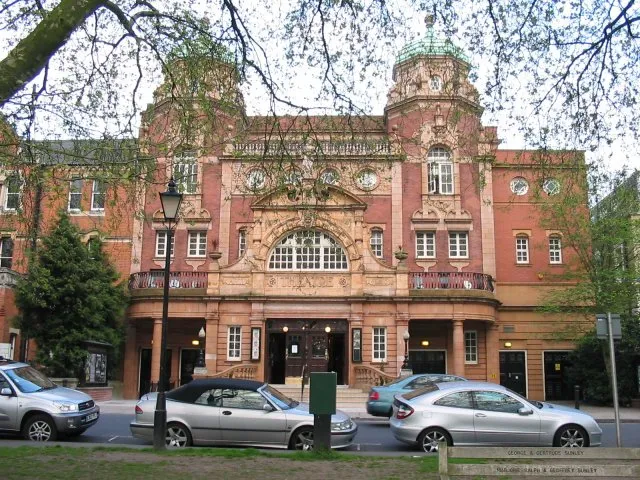
Photo: Vicky Ayech, CC BY-SA 2.0, via Wikimedia Commons
There is a moment in every UK theatre when the lights come up, the audience blinks, and someone says “Pub?” The interval is often described as a break. Ask the people who run it and they will tell you it is a scene. Not the main one, not the one in the programme, but a scene nonetheless — with its own cues, its own blocking, and its own way of going wrong.
The Queue Is the First Cue
“The interval starts before the curtain,” says a front-of-house manager at a mid-scale theatre in the North West. “It starts when the audience looks at their watch in the second half of act one.” By the time the house lights rise, the bar staff have already read the room. They know which aisle will move first, which row will hesitate, and which group will send one person ahead with the order.
The choreography is subtle but deliberate. Pre-order slips on the back of seats. A second till opened at the far end of the bar. A sign pointing to the upstairs kiosk that nobody reads until the queue reaches the door. “You are not selling drinks,” the manager says. “You are managing disappointment. The goal is that nobody spends the whole interval in a queue and then resents the second act.”
In London’s West End, where interval spend can make or break a bar’s night, the maths is tighter. One bar supervisor at a Victoria theatre describes a “two-pour rule”: nothing that takes more than two movements. Pre-mixed bottles, pre-poured glasses, card readers angled towards the customer. “If someone orders a cocktail at 8.42pm and the second act is at 8.50pm, you have to decide whether you are running a bar or a theatre,” she says. “We are running a theatre.”
Ice Cream as Interval Logic
Then there is the ice cream. The tub and the little wooden spoon are as much a part of the UK interval as the bell. Ushers positioned at the foot of the stairs, trays balanced, a practised line: “Vanilla, chocolate, or the strawberry one?” It looks like a side hustle. It is actually a traffic system.
“If we sell ice cream in the auditorium, people stay in their seats,” says an usher at a regional producing house in the South West. “If we sell it in the foyer, they wander. Then the bell goes and they are still at the counter, and you have got forty people trying to get back to row H while the lights are already dimming.” The tray is not convenience. It is crowd control with a dairy product.
The choice of what to sell matters too. A theatre in Sheffield runs a shorter interval menu on school nights: fewer options, faster service, less decision paralysis. A venue in Brighton leans into local suppliers, but only those who can deliver in tubs that stack. “You can have the best ice cream in Sussex,” the usher says, “but if the lid does not fit the tray, it is not coming in.”
The Bell, the Announcement, the Hush
The interval has a soundtrack. First the bell — or the chime, or the recorded voice that says the second half will begin in five minutes. Then the announcement itself. The wording is rarely accidental. “Ladies and gentlemen, please take your seats for the second half” is not just information. It is a cue, and the audience responds to it like one.
A director who has worked in both subsidised and commercial theatre says the interval announcement sets the tone for what follows. “If the voice is apologetic, the audience comes back apologetic,” she says. “If it is brisk, they come back brisk. The interval is a mood bridge. You are asking them to leave the world of the first act and enter the world of the second. The announcement is the handover.”
Lighting does the rest. House lights at seventy per cent, not a hundred. A warm wash in the foyer. The bar lit so that faces look good but queues look short. “You want people to feel like they are still inside the evening,” says a lighting technician at a touring venue in the Midlands. “Not like they have been released into a service station.”
When the Break Breaks
Not every interval goes to plan. The bar runs out of change. The ice cream tray takes a tumble on the stairs. A latecomer from the first act finally arrives and cannot find their seat. The bell goes, the audience does not move, and the second act begins to a half-empty auditorium.
“You can feel it,” says the North West front-of-house manager. “The actors come on and they are playing to a room that is still arriving. It is like starting a race while people are still tying their laces.” The recovery is rarely dramatic. A short pause. An extra minute of preshow music. An usher who knows exactly which aisle to hold. But the mood has shifted, and everyone backstage knows it.
The worst interval, several staff told me, is the one that is too long. Twenty minutes is the sweet spot. Fifteen is a scramble. Thirty is a slump. “At twenty-five minutes, people start to leave the building,” says the bar supervisor. “They go for a walk. They forget they are at the theatre.”
The Quiet Reset
What happens in the last two minutes is the part audiences never see. The bar staff stop serving. The ushers take their positions. The stage management team checks the set. The house lights dip. And somewhere in the wings, an actor takes a breath.
The interval is not dead time. It is a held note. The best UK theatres know that the twenty minutes between the acts are still part of the performance — a scene in which the audience is the cast, the foyer is the stage, and the bell is the cue. Get it right and nobody notices. Get it wrong and the second act never quite recovers.